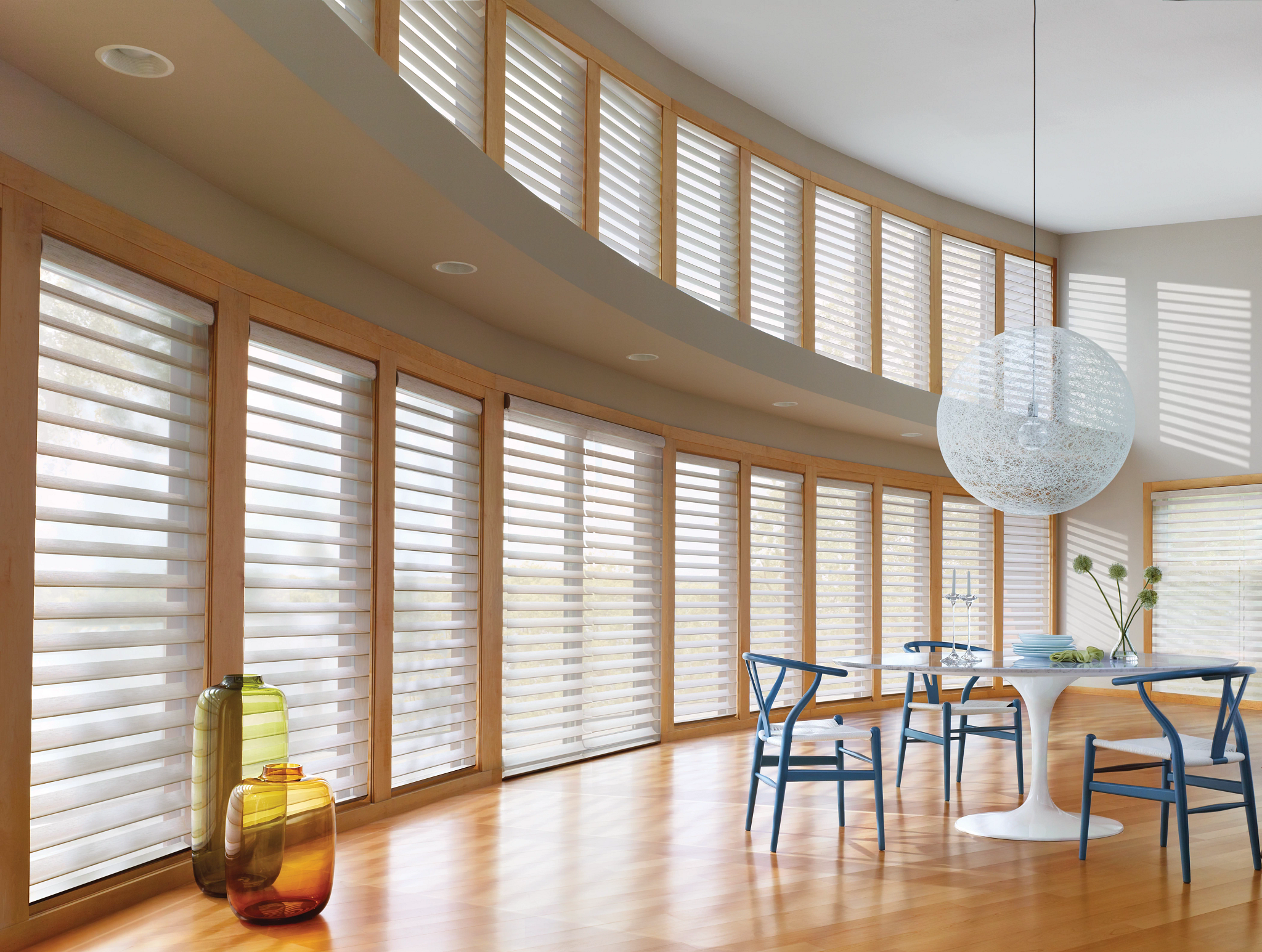
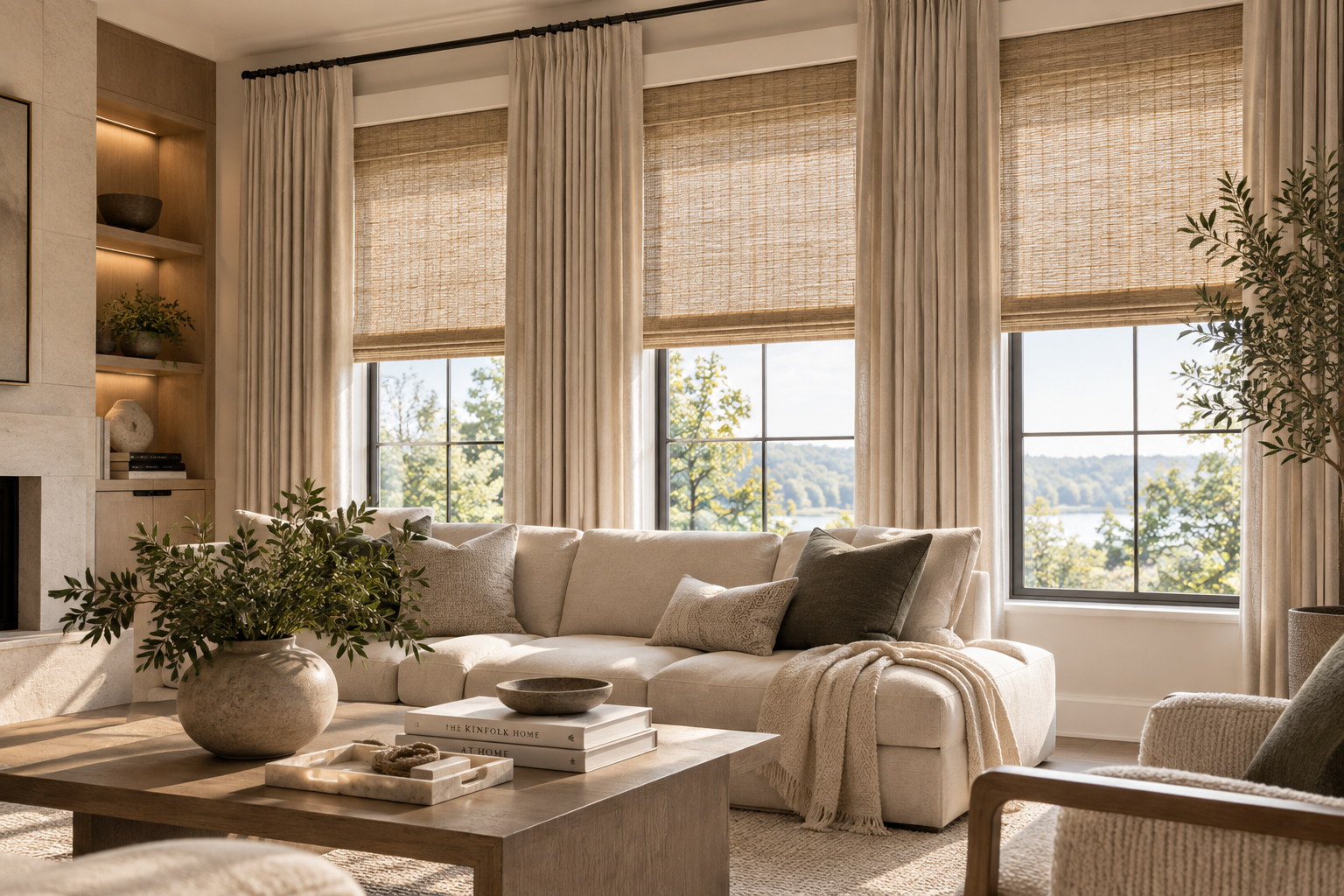
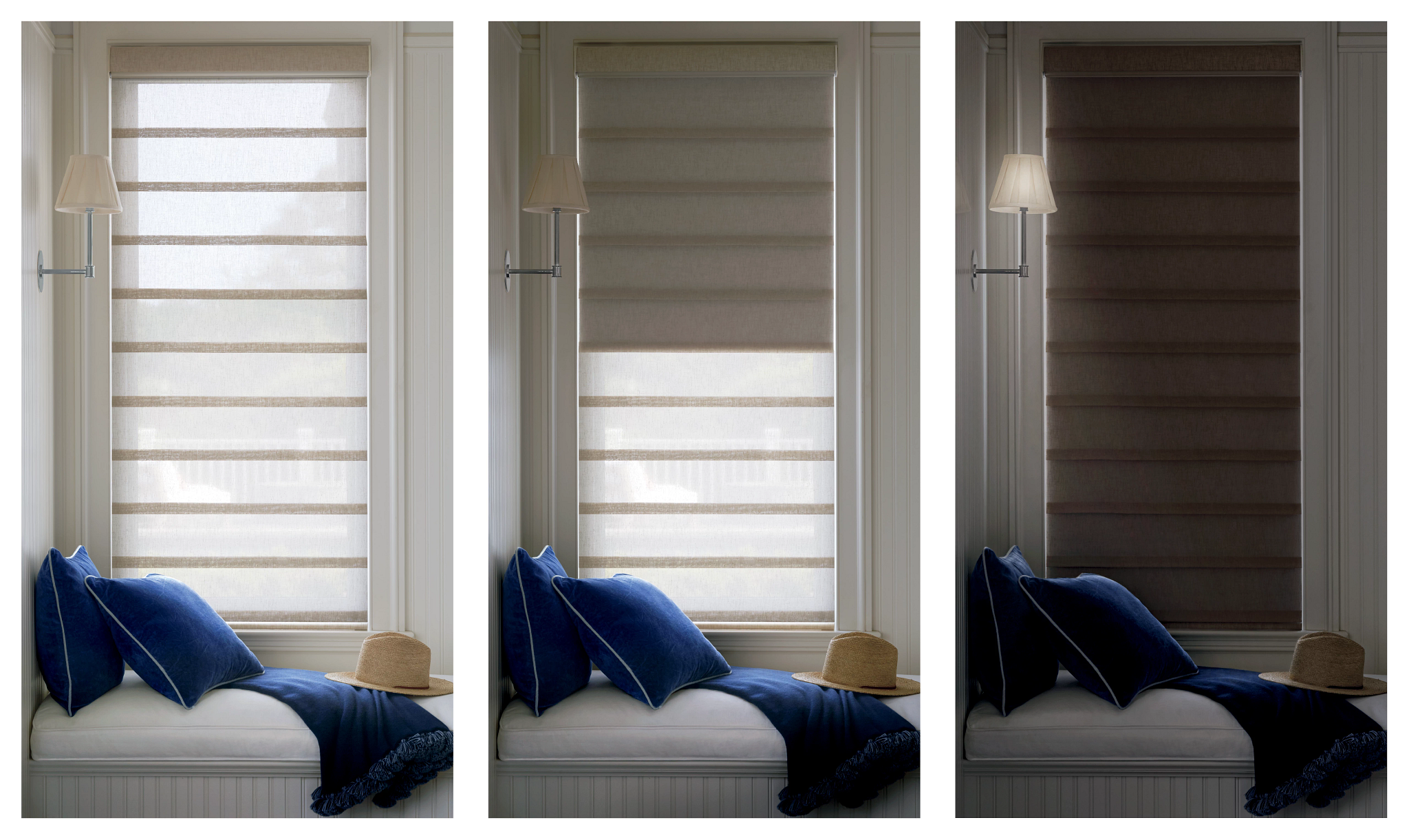
Commercial window treatments have a bigger job than simply covering a window.
In an office, they may need to reduce glare on computer screens without eliminating natural light. In a restaurant, they may need to control intense afternoon sun while preserving the atmosphere of the space. In a healthcare setting, privacy and ease of operation may be the priority. And in a conference room, the right shades can make presentations easier to see while maintaining a clean, professional environment.
That is why choosing commercial window shades should begin with how the space actually functions, not simply with a fabric or color.
At Shade Savvy, we work with businesses, property managers, interior designers, architects, builders and other trade professionals throughout Pittsburgh and Western Pennsylvania to design custom window treatments around the needs of each project. Depending on the space, the right solution may include solar shades, roller shades, room-darkening treatments, motorized shades, manual shades, or a combination of several products throughout the property. As an official Hunter Douglas partner, Shade Savvy offers Silhouette sheer shadings, Pirouette window shadings, Luminette privacy sheers, Vignette Roman shades, Duette cellular shades, and Designer roller, solar and banded shades, including PowerView motorization.
This guide explains what to consider when choosing commercial window treatments, which shade styles work well in different environments, and when motorization may, or may not, make sense for your project.
Quick links: Choosing a shade · Motorized vs. manual · Trade partners
What Are the Best Window Shades for Commercial Spaces?
There is no single window shade that is best for every commercial environment. The right product depends on several factors:
- How the room is used
- Window size and orientation
- Amount of direct sunlight
- Glare
- Privacy requirements
- Desired level of natural light
- Interior design and architecture
- How frequently the shades will be adjusted
- Whether windows are easy to reach
- Manual versus motorized operation
- Integration with lighting or building-control systems
- Fire code and safety requirements
- Project budget
Understanding these requirements before selecting a product can prevent a window treatment from solving one problem while creating another. For example, eliminating glare does not necessarily mean completely blocking the windows. In many offices, an appropriately selected solar shade can reduce glare while maintaining daylight and some connection to the exterior.
Quick Guide: Matching Shades to Space Type
| Space | Typical Priority | Products Often Considered | Operation |
|---|---|---|---|
| Open office / private offices | Glare control, daylight, views | Solar roller shades | Manual for accessible windows; motorized for large or hard-to-reach glass |
| Conference and training rooms | Flexible light control for screens | Solar plus room-darkening, or dual-shade systems | Often motorized and grouped |
| Restaurants and hospitality | Sun and heat control, atmosphere | Solar or decorative roller shades, layered treatments | Often motorized where sun conditions change |
| Healthcare and professional offices | Privacy, easy staff operation | Roller shades, light-filtering or room-darkening | Usually manual cordless; motorized for large areas |
| Retail and showrooms | UV and fading protection, open feel | Solar shades | Manual or motorized |
| Schools and training spaces | Screen glare, durability, cordless safety | Solar or light-filtering roller shades | Manual cordless; motorized for tall windows |
Commercial Solar Shades
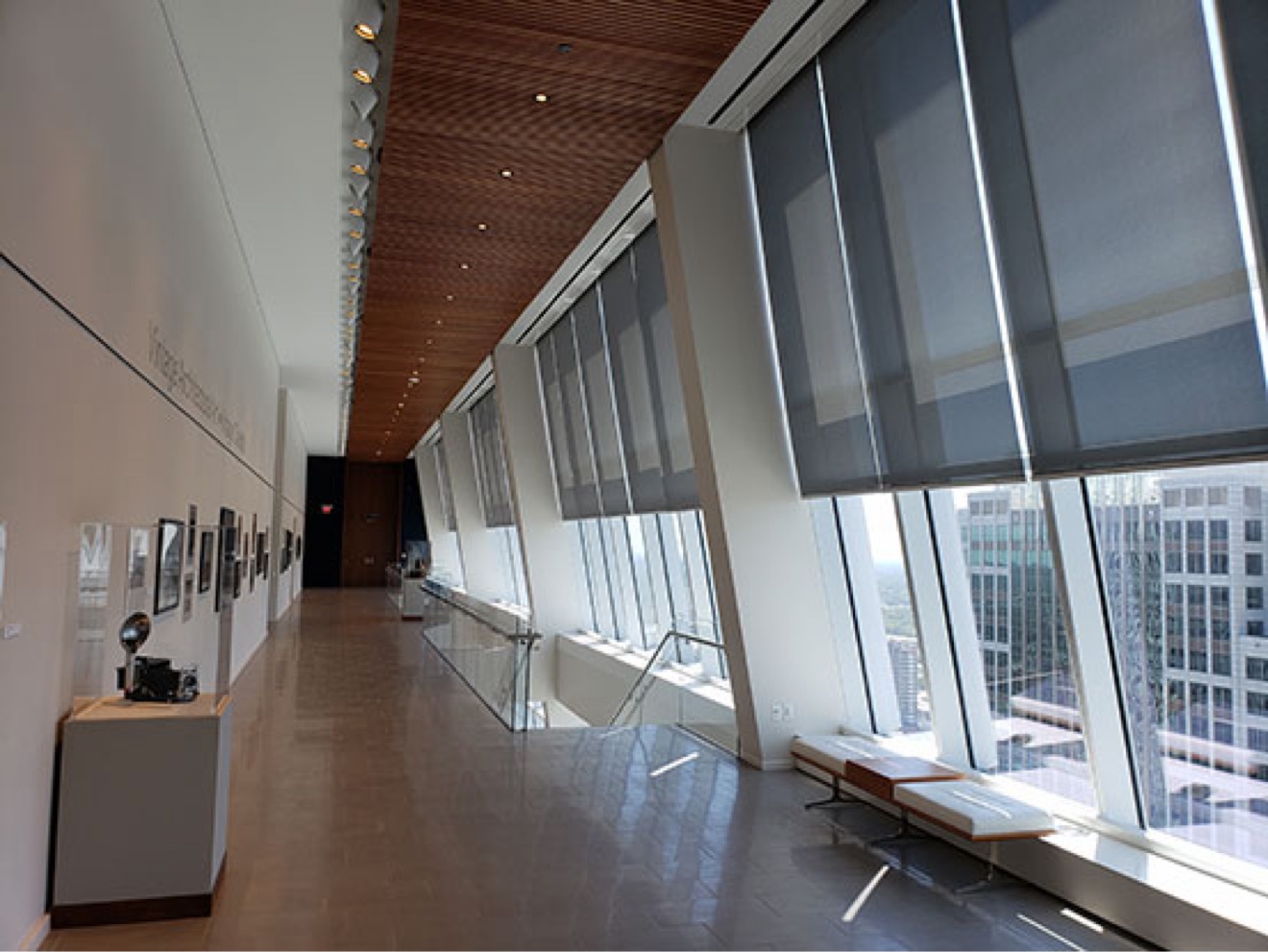
Solar shades are one of the most useful window treatments for many commercial applications. They are designed to help manage sunlight, glare and UV exposure while maintaining a streamlined architectural appearance.
Depending on the fabric and openness factor selected, solar shades can preserve varying degrees of exterior visibility while reducing the intensity of incoming sunlight.
Where Do Commercial Solar Shades Work Well?
- Corporate offices
- Conference rooms
- Restaurants
- Retail environments
- Showrooms
- Medical and professional offices
- Schools and educational spaces
- Hospitality environments
- Commercial buildings with large expanses of glass
What Does Solar Shade Openness Mean?
Openness describes how tightly the fabric is woven, and it is one of the most important decisions when selecting solar shades. Different openness levels affect exterior visibility, glare reduction, privacy and the amount of daylight entering the space.
A more open fabric generally preserves more of the exterior view, while a tighter fabric provides greater solar control and privacy during daylight hours. There is no universally correct openness factor. Window orientation, surrounding buildings, sun exposure, desired view and the function of the room should all be considered.
Commercial Roller Shades
Roller shades are another popular choice for commercial environments because of their clean appearance and versatility. They can be specified with solar, light-filtering or room-darkening fabrics depending on the needs of the space.
The simple profile of a roller shade works with many architectural styles because the treatment does not visually compete with the rest of the room. Roller shades can be particularly effective for projects where multiple windows need a consistent appearance throughout the property.
Light-Filtering vs. Room-Darkening Commercial Shades
One of the first questions to ask is how much light the room actually needs.
Light-Filtering Shades
Light-filtering fabrics soften incoming daylight while maintaining brightness in the room. They can work well in offices, reception areas, waiting rooms and other spaces where natural light is desirable but direct sunlight needs to be softened.
Room-Darkening Shades
Room-darkening treatments provide significantly greater light control and privacy. They may be appropriate for:
- Conference rooms
- Presentation spaces
- Media rooms
- Training rooms
- Hospitality spaces
- Areas requiring increased privacy
The fabric itself is only part of a room-darkening system. Light can still enter around the edges of a shade unless the window treatment is specifically designed to minimize those gaps.
Motorized vs. Manual Commercial Window Shades
Motorization can be extremely useful in commercial environments, but it is not necessary for every window. Its value increases when shades are large, difficult to reach, adjusted frequently, or need to operate together.
Motorized vs. Manual at a Glance
| Motorized | Manual | |
|---|---|---|
| Best for | Large, tall or hard-to-reach windows; groups of shades that should move together | Accessible windows that are adjusted infrequently |
| Control | Wall station, remote, app, schedules, or building/automation integration | Cordless lift, chain, or wand operation |
| Upfront cost | Higher (motors, power, controls) | Lower |
| Day-to-day | One touch adjusts many shades; schedules handle it automatically | Each shade adjusted by hand |
| Consider | Power source and wiring; motor and control compatibility | Reach and ease of operation for staff |
When Do Motorized Commercial Shades Make Sense?
- Large expanses of glass
- Tall or hard-to-reach windows
- Conference rooms
- Executive offices
- Restaurants with changing sun exposure
- Hospitality environments
- Event spaces
- Schools and institutional spaces
- Buildings with multiple shades that need coordinated operation
Instead of employees manually adjusting numerous shades throughout the day, groups of shades can be controlled together. Depending on the selected system, shades may be operated from wall controls, remotes, schedules, compatible apps or integrated control systems. Learn more about motorized shades.
When Are Manual Commercial Shades the Better Choice?
Manual shades can be the smarter choice when windows are easy to reach and adjustments are infrequent. A small private office with one accessible window may gain very little from motorization.
Using motorization strategically allows a commercial project to invest in automation where it provides meaningful value while using coordinated manual shades elsewhere. The result can still look completely cohesive throughout the building.
Commercial Window Shades by Space Type
Offices
Natural light can make an office feel brighter and more inviting, but uncontrolled sunlight can create significant problems. Glare on computer screens, uneven brightness and heat gain can make certain workspaces uncomfortable throughout portions of the day.
Commercial office shades should balance glare control, natural daylight, exterior views, employee comfort, privacy, UV protection and interior design. Solar roller shades are often considered because they can help manage sunlight without necessarily eliminating the exterior view.
Different sides of the same building may also require different solutions. A west-facing conference room experiencing intense afternoon sun may need substantially different solar control than a north-facing office.
Conference Rooms
Conference rooms often need greater flexibility than standard office spaces. During a meeting, occupants may want natural daylight. During a presentation or video conference, they may need significantly more glare and light control.
Depending on the room, this can be accomplished with solar shades, room-darkening roller shades, dual-shade systems or motorized treatments. Motorization can be especially convenient because multiple shades can be adjusted together without interrupting a meeting.
Restaurants and Hospitality
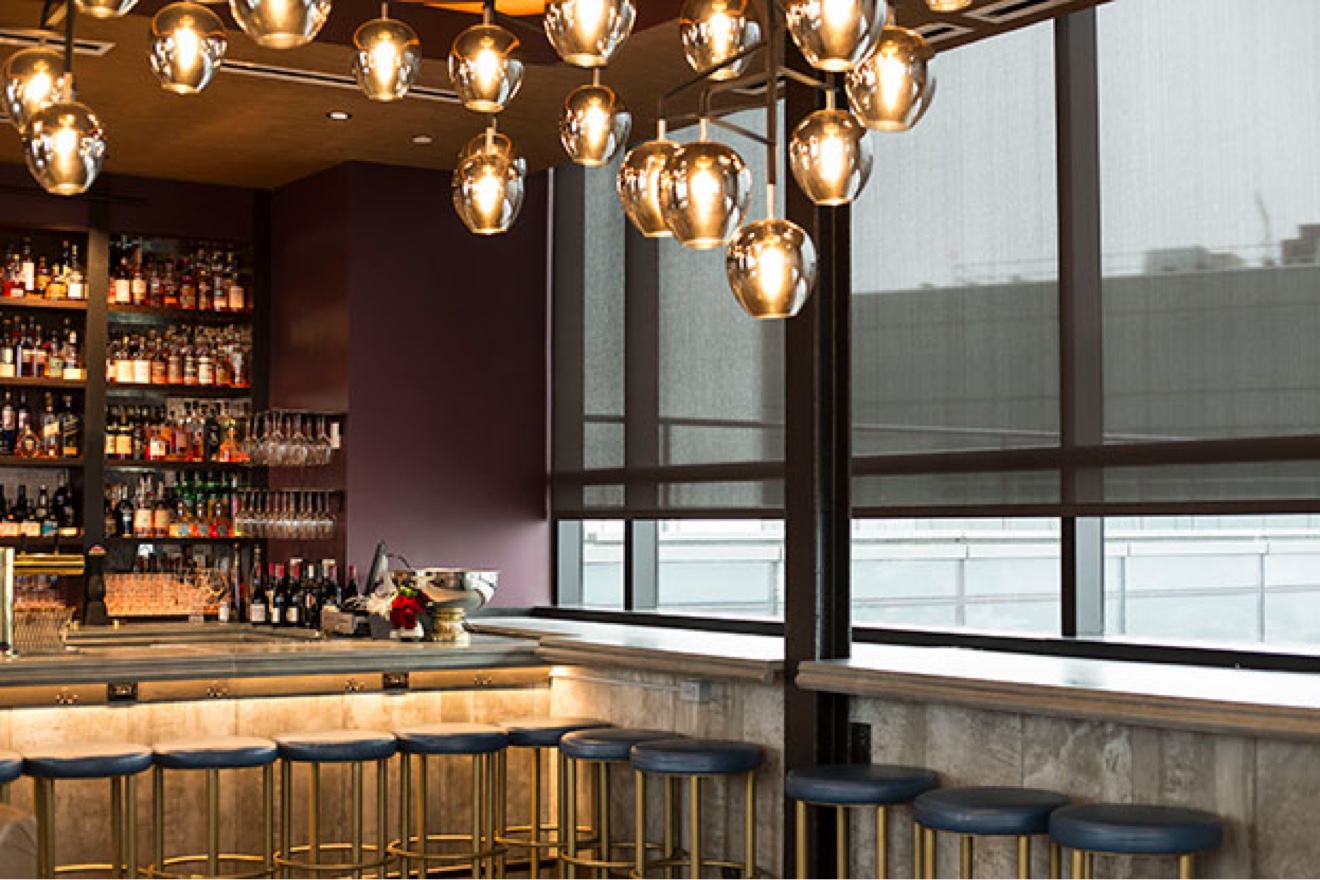
In restaurants and hospitality environments, window treatments affect both comfort and atmosphere. A beautiful dining area can become uncomfortable when direct afternoon sun hits guests' tables or creates excessive heat and glare. At the same time, completely blocking the windows may diminish the character of the space.
The goal is to find the right balance. Depending on the property, that might include solar shades during daylight hours, decorative roller shades, motorized treatments for frequently changing conditions, or layered treatments where greater flexibility is needed. Fabric color, texture and visibility should also complement the overall interior design.
Healthcare and Professional Offices
Medical, dental, wellness and professional offices have their own set of requirements. Privacy may be particularly important, while waiting rooms and reception areas may benefit from natural daylight. Window treatments should also be easy for staff to operate and visually appropriate for a professional environment.
Retail and Showrooms
Retail spaces often rely on natural light, but prolonged sun exposure can affect merchandise, flooring, displays and furnishings. Solar shades can help reduce direct sunlight and UV exposure while maintaining a connection to the exterior. For showrooms, the ability to control glare without making the space feel closed off can be especially valuable.
Schools and Educational Spaces
Classrooms, training rooms and other educational spaces may require glare control for screens and presentations while still benefiting from natural daylight. Cordless operation, ease of use and durability are also important. Large or hard-to-reach windows may benefit from motorization, while accessible windows may be well suited to manual cordless treatments.
Large and Hard-to-Reach Windows
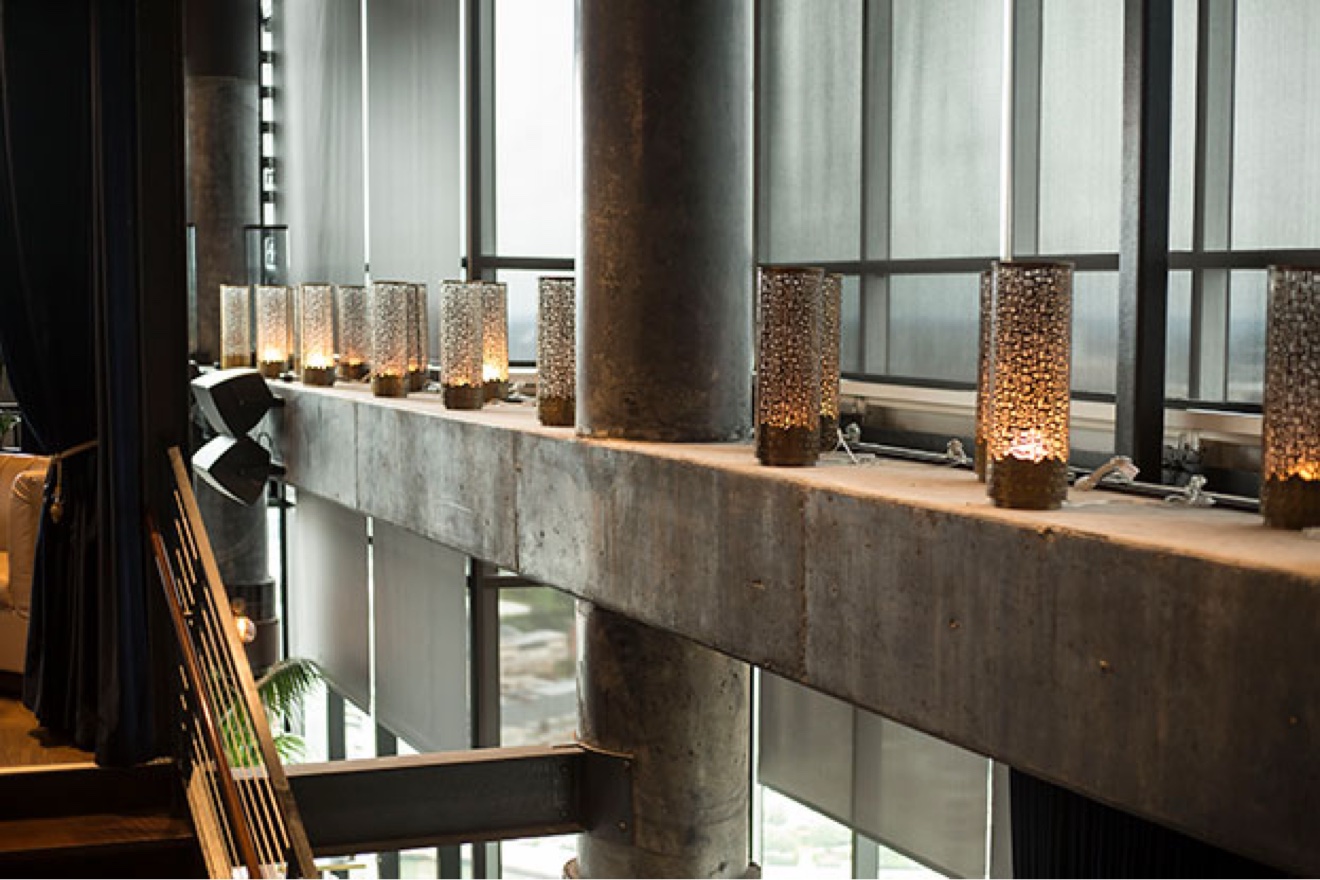
Commercial architecture frequently includes windows that are much larger or taller than those found in typical residential applications. These windows require careful consideration of shade dimensions, fabric weight, hardware, mounting conditions and operation. Motorization can be particularly valuable when manual operation would be inconvenient or impractical.
Professional measurement is also critical. Small measurement errors become much more noticeable across large groups of windows or oversized openings.
Inside Mount or Outside Mount?
An inside-mounted shade fits within the window opening and can provide a streamlined architectural appearance when sufficient mounting depth is available. An outside-mounted shade extends beyond the window opening and may provide greater coverage or be necessary when the window construction does not allow an inside mount. The appropriate choice depends on the window, surrounding architecture, desired light control and selected shade system.
New Construction vs. Existing Commercial Buildings
New Construction
New construction provides an opportunity to coordinate window treatments earlier in the project. If motorized shades are planned, electrical requirements and control wiring can potentially be addressed before walls and ceilings are finished. Early coordination among the architect, designer, builder, electrical contractor, automation professional and window-treatment specialist can help create a cleaner finished installation.
Existing Buildings and Renovations
Commercial motorized shades can also be added to many existing buildings. Depending on the selected product and application, battery, rechargeable, plug-in or other power options may reduce the need for extensive new wiring. Manual commercial shades remain an effective option where automation is unnecessary.
Can Commercial Shades Integrate With Building Controls?
Depending on the shade motor and control platform, motorized shades may be integrated with compatible lighting, automation or building-control systems. This can allow shades to operate as part of scheduled routines or coordinated room controls.
Compatibility should be evaluated during the design phase rather than after shades have already been ordered. The motor, controls, wiring requirements and integration strategy should all be considered as part of the overall system.
For projects with broader smart-building goals — shades that respond to lighting scenes, AV systems or building schedules — Shade Savvy coordinates with the project's automation professionals from design through installation, so shades operate as part of the larger system rather than alongside it.
Fire Code and Safety Considerations
In many commercial occupancies, window treatment fabrics must meet applicable fire code requirements, which vary by building type, occupancy and local jurisdiction. Many commercial shade fabrics are available with certifications such as NFPA 701.
Fire code requirements should be confirmed with the authority having jurisdiction early in the project, particularly for healthcare, education, hospitality and assembly occupancies. Cordless operation is also worth specifying in any space used by children.
Glare Control and Energy Efficiency
Glare. Glare is one of the most common reasons businesses consider new window treatments. Computer screens, televisions and presentation displays can become difficult to view when direct sunlight enters the room. The appropriate fabric can reduce the intensity of incoming light while preserving useful daylight. Window orientation matters considerably, and a solution appropriate for one side of a building may not be ideal for another.
Energy. Window treatments can help manage solar heat gain and improve occupant comfort, although actual energy performance depends on many factors, including window construction, building envelope, orientation, shade fabric, product type and how the shades are operated. Automated shades can make consistent operation easier by adjusting selected windows according to schedules or building-use patterns. Window treatments should be viewed as one component of the building's broader daylight, comfort and energy strategy.
How Do You Choose a Commercial Shade Fabric?
Commercial shade fabric should be selected based on performance as well as appearance. Important considerations include:
- Glare reduction
- Privacy
- Exterior visibility
- Light transmission
- UV exposure
- Room-darkening requirements
- Fire code compliance
- Color and texture
- Interior design
- Durability
- Cleaning and maintenance requirements
A fabric sample should ideally be evaluated in the actual space whenever possible. Light can dramatically change the appearance and performance of a material, particularly when comparing different window orientations.
Why Professional Measurement and Installation Matter
Commercial window-treatment projects can involve dozens, or even hundreds, of individual openings, and consistency matters. Professional measurement helps account for variations in window dimensions, mounting surfaces, obstructions, hardware requirements and alignment. Installation also affects how finished shades look and operate. On projects with multiple windows, careful planning helps maintain consistent heights, alignment and spacing throughout the space.
Working With Interior Designers, Architects, Builders and Property Managers
Window treatments often intersect with several parts of a commercial project. Architects may be considering mounting conditions and window details. Interior designers may be coordinating fabrics, colors and finishes. Builders may need information about blocking, electrical requirements or installation timing. Automation professionals may need to coordinate controls and integration.
Bringing the window-treatment discussion into the project early can help identify these requirements before construction is complete. Shade Savvy works collaboratively with design and trade professionals to help select and coordinate window treatments that support both the functional and aesthetic goals of the project.
Learn about the Shade Savvy trade program — trade discounts and dedicated project partnership for interior designers, architects, realtors and custom builders across Greater Pittsburgh, from planning-phase smart shading integration through on-schedule installation.
What to Ask Before Choosing a Commercial Shade Provider
Not every window-treatment company is set up for commercial work. Before committing to a provider, it is worth asking:
- Do you measure and install with your own team, or is installation subcontracted?
- Which shade systems and motor platforms do you install, and why those?
- Can you coordinate with our architect, designer, builder or electrician?
- Which of your fabrics meet commercial fire code requirements?
- What does the warranty cover, and who services the shades after installation?
- Can we see fabric samples in our actual space before deciding?
- What is a realistic lead time for a project of our size?
- Can you show us comparable commercial projects you have completed?
The answers will tell you quickly whether a provider is set up for the realities of commercial projects — or primarily a residential shop taking on commercial work.
Where We Work
Shade Savvy serves commercial and trade clients throughout Pittsburgh and Western Pennsylvania, including Sewickley, Sewickley Heights, Mt. Lebanon, Upper St. Clair, Bethel Park, Cranberry Township, Wexford, McCandless, Fox Chapel, Moon Township, Squirrel Hill and Shadyside, and surrounding communities. Pittsburgh's mix of renovated historic buildings, converted industrial space, modern office buildings and suburban commercial developments often brings different window conditions, from deep masonry openings to large modern glass walls, and the right shade solution can differ accordingly.
How Much Do Commercial Window Shades Cost in Pittsburgh?
There is no single price for custom commercial window treatments because every project is different. The most useful way to think about budget is to understand what moves the price up or down.
| Cost Driver | Generally Lowers Cost | Generally Raises Cost |
|---|---|---|
| Operation | Manual cordless or chain operation | Motorized with wall controls, schedules or integration |
| Window size | Standard-size, accessible openings | Oversized or tall openings requiring heavier hardware |
| Power and wiring | Battery or rechargeable motors | Hardwired power and control wiring |
| Fabric and system | Single-layer roller shade | Dual shades, room-darkening with side channels, specialty fabrics |
| Mounting | Straightforward inside mounts | Complex mounting, difficult access, custom brackets or pockets |
| Integration | Standalone controls | Lighting, automation or building-control integration |
What to Expect: The Project Process
- Consultation. We discuss the space, goals, schedule and budget.
- Site visit and professional measurement. We evaluate window conditions, orientation, mounting and power.
- Recommendation and proposal. We recommend products, fabrics and operation, with pricing.
- Fabric and sample review. You evaluate samples in the actual space.
- Production and delivery. Typical lead times vary by product and project size.
- Professional installation. We install, align and test operation, including motorized controls.
Frequently Asked Questions About Commercial Window Shades
What are the best shades for office windows?
Solar roller shades are frequently considered for offices because they help reduce glare and direct sunlight while maintaining natural daylight and varying degrees of exterior visibility. The best product depends on window orientation, privacy needs and how the room is used.
Are motorized shades worth it for commercial buildings?
Motorized shades can provide significant value for large, tall, frequently adjusted or hard-to-reach windows and for spaces where multiple shades need to operate together. Manual shades may be more practical for smaller, easily accessible windows that are adjusted infrequently.
Can commercial shades reduce glare on computer screens?
Yes. Properly selected solar and light-filtering fabrics can help reduce glare while allowing useful natural light into the workspace.
Can commercial shades provide privacy?
Yes, but the level of privacy depends on the shade style, fabric and lighting conditions. Solar fabrics that provide daytime privacy may not provide the same privacy at night when interior lights are on. Projects with significant privacy requirements should be designed accordingly.
Can commercial window shades be automated?
Yes. Many commercial shade systems can be motorized and controlled individually or in groups. Depending on the system, controls may include wall stations, remotes, schedules, compatible apps and integration with other building or automation systems.
Can motorized shades be installed in an existing commercial building?
Often, yes. The available options depend on the window, selected shade system, access to power and project requirements. Battery, rechargeable and other power solutions may be available for certain applications.
What is the difference between solar shades and blackout shades?
Solar shades manage sunlight and glare while maintaining varying levels of exterior visibility. Room-darkening or blackout fabrics block substantially more light and provide greater privacy. Complete blackout performance may require additional side channels or specialized installation details.
Do commercial window shades need to be motorized?
No. Many commercial projects use a combination of motorized and manual shades. The best approach is to use automation where it improves operation and manual treatments where they are more practical.
Do commercial shade fabrics need to meet fire codes?
In many commercial occupancies, window treatment fabrics must meet applicable fire code requirements, which vary by building type, occupancy and local jurisdiction. Many commercial shade fabrics are available with certifications such as NFPA 701. Requirements should be confirmed with the authority having jurisdiction early in the project.
What kind of warranty and ongoing service should we expect?
Shade Savvy manages warranty claims and ongoing service for its commercial projects.
Does Shade Savvy work with designers, architects and builders?
Yes. Shade Savvy works with interior designers, architects, builders, property managers, businesses and other trade professionals throughout Pittsburgh and Western Pennsylvania.
How much do commercial window shades cost in Pittsburgh?
Pricing depends on the number and size of windows, shade style and fabric, manual versus motorized operation, power and controls, mounting conditions and installation requirements. A site visit and professional measurement allow us to provide an accurate project proposal.
Commercial Window Treatments Designed Around the Space
The best commercial window treatment is not simply the shade that looks best in a sample book. It is the one that addresses the way the building actually functions.
That may mean reducing glare in an office without losing the view, creating privacy in a professional environment, controlling afternoon sun in a restaurant, coordinating dozens of shades across a commercial property, or integrating motorized shades with a larger control system. And it does not necessarily mean motorizing every window.
At Shade Savvy, we help businesses and trade professionals throughout Pittsburgh and Western Pennsylvania evaluate the complete space and select the right combination of manual and motorized custom window treatments for the project.
Planning a Commercial Window Treatment Project?
Explore Our Commercial Shading Solutions
Boardrooms, restaurants, offices, schools and houses of worship — manual and motorized, designed around your space.
Whether you are designing a new commercial building, renovating an existing space or replacing window treatments in an operating business, early planning can make product selection and installation significantly easier. Shade Savvy can help evaluate window conditions, light and glare, privacy requirements, fabric options, manual versus motorized operation and integration considerations.
Schedule a commercial window-treatment consultation or call (412)746-0455. Trade professionals: contact our trade team.
Looking for window treatments for your home? Visit our residential page.