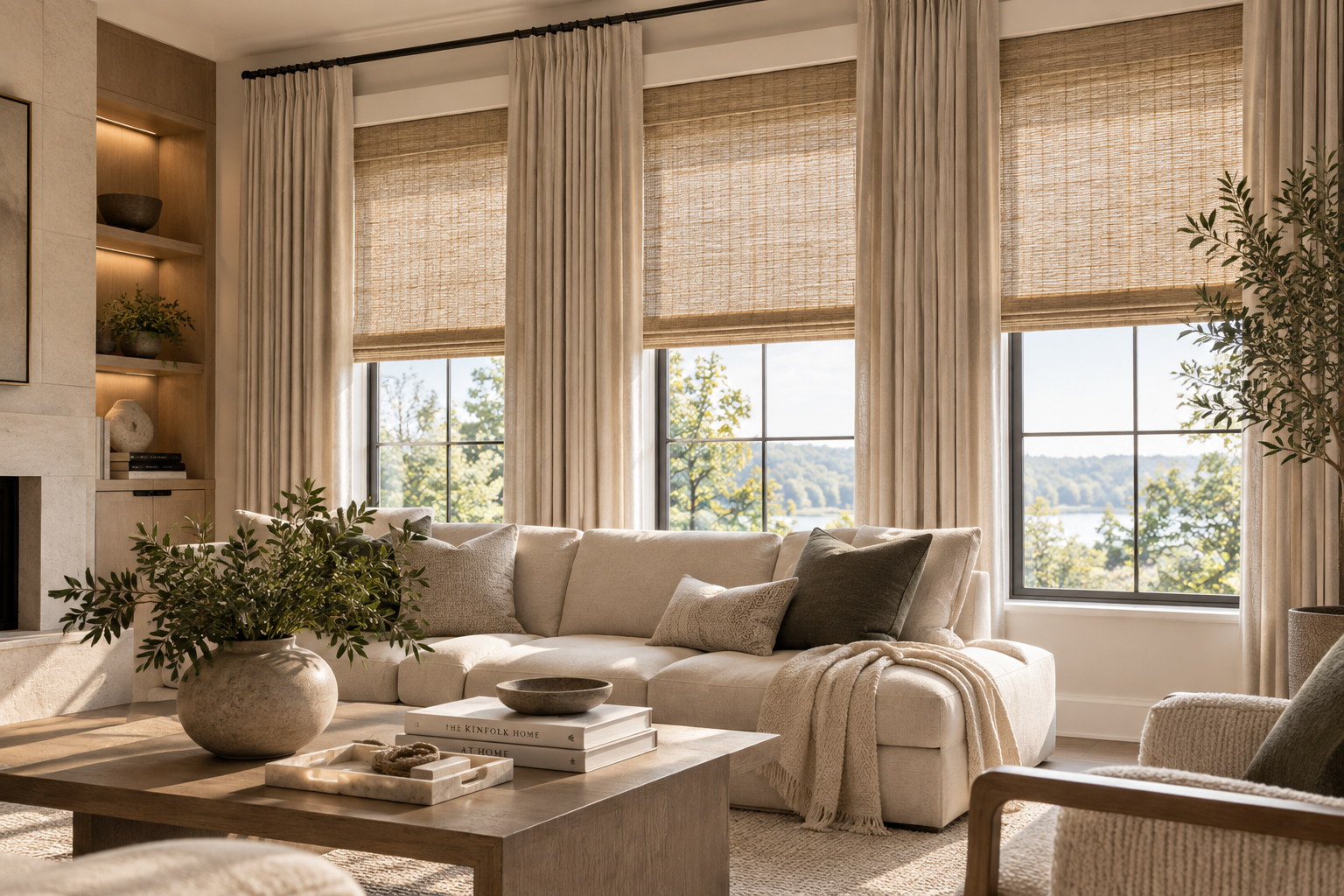
Layered Window Treatments: Why Designers Are Pairing Shades + Drapery
Layering is becoming one of the most important approaches to window design. Rather than asking one window treatment to handle privacy, light control and the overall aesthetic of a room, designers are increasingly combining shades and drapery—allowing each layer to do what it does best. At Shade Savvy, we use this approach in both residential and commercial spaces throughout the Pittsburgh area, particularly when a room needs functionality without compromising the design. 1. WHY LAYERING WORKS A single window treatment can be beautiful, but layering creates more flexibility. A shade can provide privacy, glare reduction and precise light control, while drapery introduces softness, texture and architectural presence. Together, they make the window feel like an intentional part of the room rather than something that was addressed after the design was finished. 2. START WITH THE FUNCTIONAL LAYER The shade typically serves as the working layer. Depending on the room, that might mean a light-filtering roller shade, woven shade, Roman shade or room-darkening treatment. This layer can be manual or motorized depending on the size of the windows, accessibility, frequency of use and the homeowner's preferences. The goal is to determine what the window needs to accomplish before selecting the decorative layer. 3. DRAPERY CHANGES THE SCALE OF THE ROOM Full-height drapery does much more than frame a window. Installing drapery higher and wider than the window opening can visually increase ceiling height, make windows appear larger and give the entire room a more finished architectural presence. This is especially effective in rooms with large windows, tall ceilings or open floor plans. 4. TEXTURE MATTERS Layering also gives designers an opportunity to combine materials. A clean roller shade paired with linen drapery creates a very different feeling than a woven natural shade paired with a softly textured neutral fabric. The materials don't need to match. In fact, subtle contrast is often what makes a layered window treatment interesting. 5. THINK ABOUT LIGHT THROUGHOUT THE DAY One of the biggest advantages of layering is flexibility. During the day, a light-filtering shade can soften harsh sunlight while maintaining natural light. In the evening, drapery can provide additional privacy and create a warmer, more intimate environment. Instead of choosing between natural light and privacy, a layered system allows the room to adapt. 6. MOTORIZATION CAN DISAPPEAR INTO THE DESIGN Motorization works particularly well in layered applications because the functional shade can operate quietly behind the drapery. The technology doesn't need to become a visual feature of the room. For frequently used shades, hard-to-reach windows or larger groups of windows, motorization can make the layered design considerably easier to use. For other spaces, a beautifully designed manual shade may be exactly what's needed. 7. THE BEST LAYERED TREATMENTS ARE PLANNED EARLY Window treatments should ideally be considered while the rest of the room is being designed. Drapery stack-back, shade depth, mounting locations, furniture placement, electrical requirements for motorization and architectural details can all influence the final result. When those decisions are made early, the window treatments feel integrated into the architecture instead of added afterward. DESIGNING THE WINDOW AS PART OF THE ROOM The best window treatments balance light, privacy, proportion, texture and function. Sometimes one treatment accomplishes everything a space needs. Other times, layering a shade with drapery creates a more complete solution. At Shade Savvy, we design both manual and motorized custom window treatments and collaborate with homeowners, interior designers, architects and builders throughout the Pittsburgh area to determine what works best for each space.