Light-Filtering vs. Blackout Shades: Which Is Right for Your Home?
Categories
By Shade Savvy | Published October 9, 2026
A room can have beautiful furniture and a carefully chosen palette and still feel uncomfortable when the light is wrong: afternoon sun on your favorite chair, a bedroom that’s too bright at sunrise, or living room windows that need more privacy after dark.
Choosing between light-filtering and blackout shades starts with how you want each room to feel and function.
Quick answer: Choose light-filtering shades for rooms where you want soft daylight and a view, like living and dining rooms. Choose room-darkening or blackout options for bedrooms and media rooms where darkness matters. Many homes use both, and dual-roller or layered designs can offer either at the same window.
At Shade Savvy, we help homeowners in Wexford and Greater Pittsburgh bring these practical decisions together with the textures, proportions and finishes that make a home feel considered.
What Are Light-Filtering Shades?
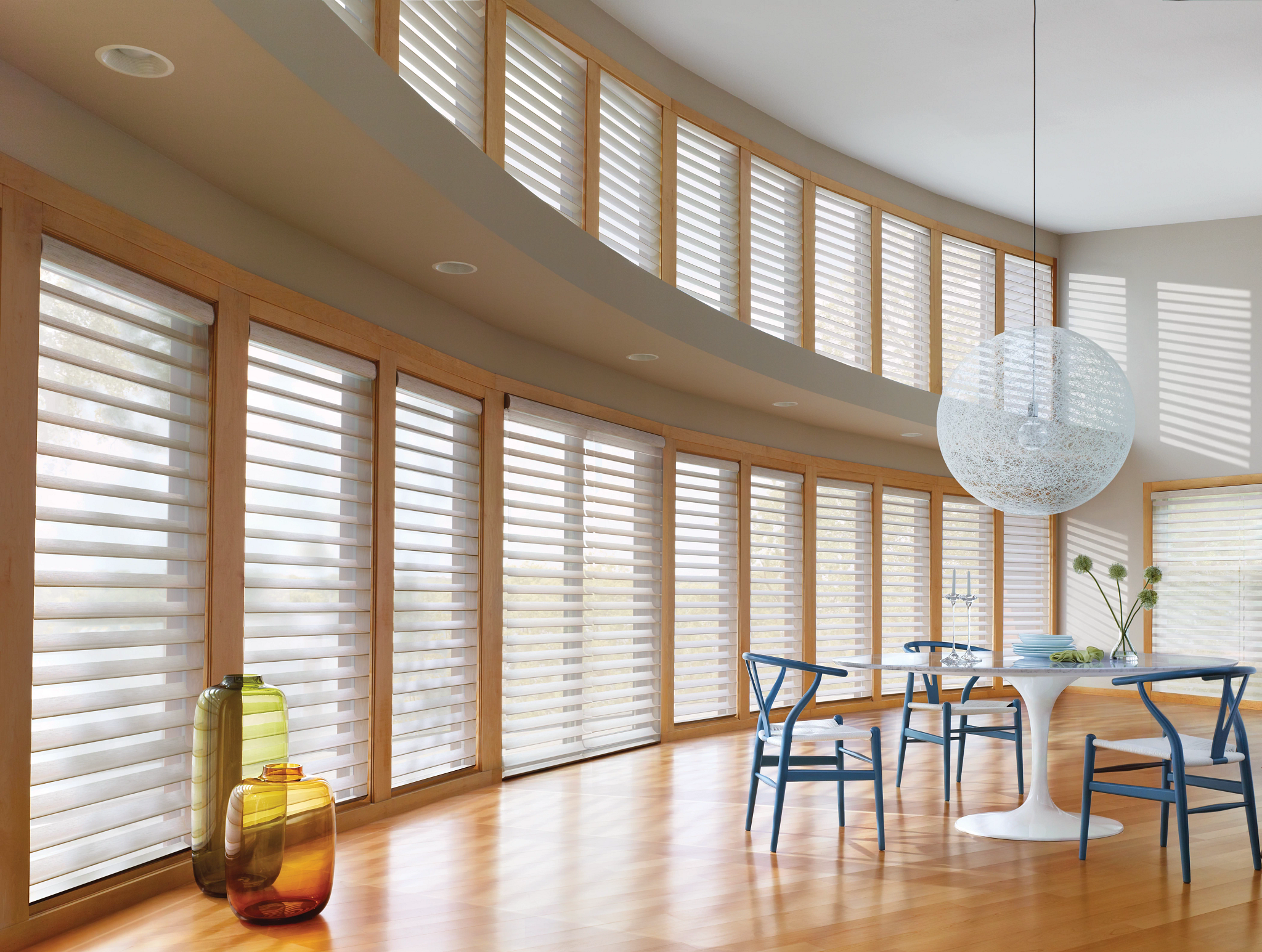
Light-filtering shades diffuse incoming daylight, creating a softer glow. They are a thoughtful starting point for rooms where you want to enjoy natural light throughout the day.
Think of a breakfast space that feels bright without the intensity of direct sun, or a living room where the windows contribute to the atmosphere without becoming the dominant feature.
Light-filtering fabrics are available in several shade styles, including roller, Roman and cellular shades. The style sets the visual character, and the fabric determines much of the light control. A textured Roman shade can complement a room with layered textiles and warm wood, while a simple roller shade creates a quieter finish around windows with clean architectural lines.
Do Light-Filtering Shades Provide Privacy at Night?
Some do, but the label “light-filtering” alone is not a guarantee. Fabric construction, opacity and the difference between indoor and outdoor lighting all affect visibility.
For a street-facing room or a window close to neighboring homes, ask how the fabric performs after dark with the interior lights on. A sample that looks right in daylight may not meet your evening privacy needs.
What Is the Difference Between Room-Darkening and Blackout Shades?
Room-darkening treatments are designed to make a space substantially darker. Blackout describes fabric that prevents light from passing through the material.
The distinction matters because blackout fabric does not automatically create a completely dark room.
Light can still enter along the sides, above the shade or at the sill. Window dimensions, mounting position and the shade system all influence the finished result. For rooms where darkness is a priority, discuss the full installation, including mounting options and available light-blocking accessories, before selecting the fabric.
Start with the outcome you want: a softer room for an afternoon movie, less early-morning light, or the darkest practical bedroom. Those are different design briefs.
Which Shades Work Best in Each Room?
Let the room’s daily routine guide the decision.
| Room | A useful starting point | What to consider |
|---|---|---|
| Living room | Light-filtering shades | Daylight, evening privacy and the view |
| Primary bedroom | Room-darkening or blackout options | Morning light and gaps around the shade |
| Home office | A light-filtering or glare-reducing fabric | Window direction, screen placement and the time of day glare is worst |
| Dining room | Light-filtering shades or a layered treatment | Daytime atmosphere and privacy after dark |
| Media room | Blackout fabric with attention to edge gaps | How dark you want the room during daytime viewing |
These are starting points, not rules. A living room used for evening movies may need more flexible light control, and a bedroom with a beautiful view may benefit from separate daytime and nighttime options.
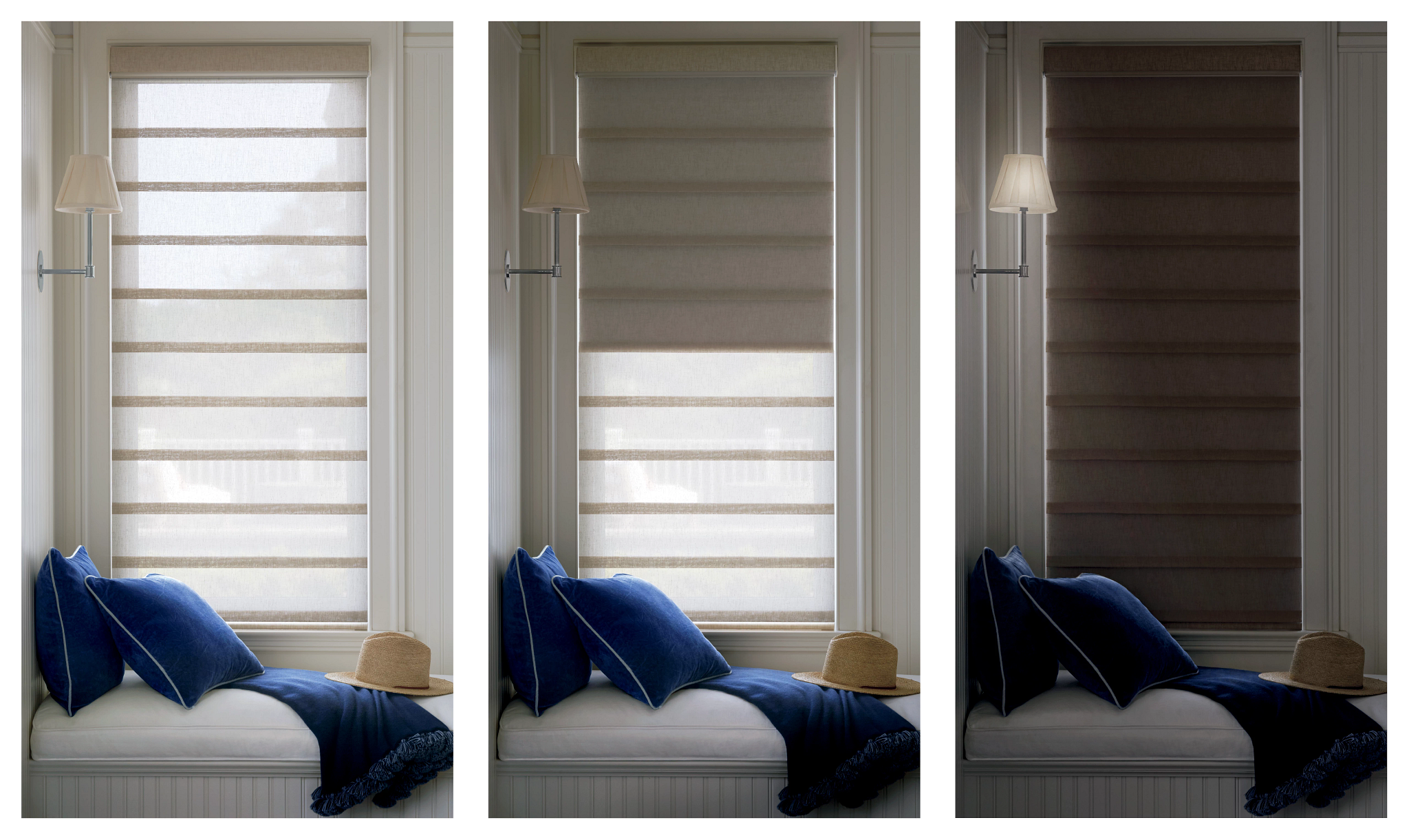
Can You Have Filtered Light and Darkness at the Same Window?
Yes. A dual-roller arrangement pairs a light-filtering or sheer fabric with a separate blackout fabric, so you can choose the layer that suits the moment.
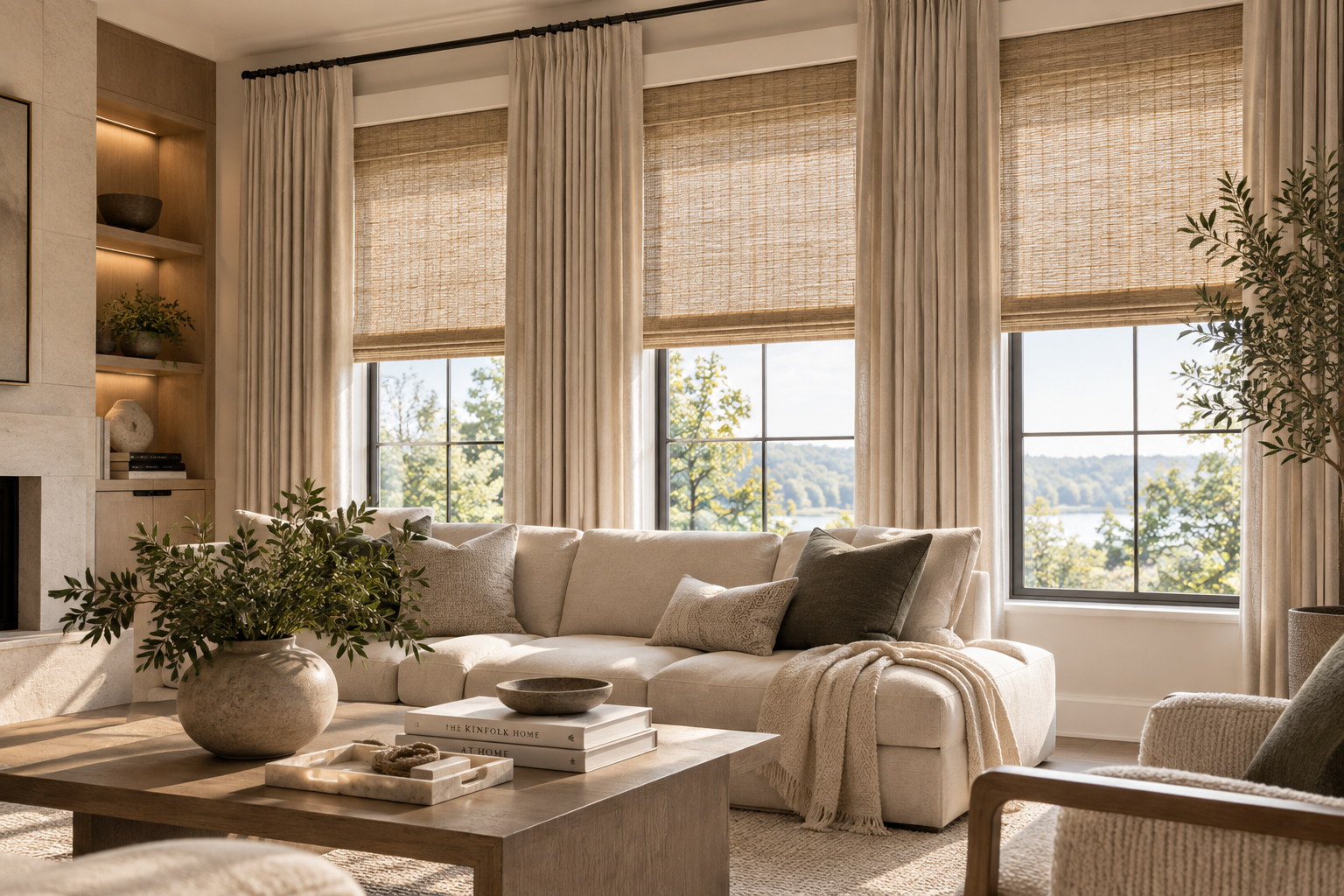
Another approach combines shades with functional drapery. The shade handles everyday light control, while drapery adds softness and another layer of coverage when closed.
For more design ideas, explore our article on layering shades and drapery.
Should You Choose Manual or Motorized Shades?
Light control and operation are separate decisions. Choose the fabric and treatment for the room’s needs, then consider how you want to adjust them.
Manual shades can be an excellent fit for accessible windows and a straightforward daily routine.
Motorized shades are worth considering for tall windows, groups of windows or spaces where you adjust the light frequently. Depending on the system, controls may include a remote, an app or scheduled operation.
You can also combine manual and motorized treatments throughout your home. Coordinated fabrics and finishes keep the design cohesive even when the operating systems differ.
How Do You Choose the Right Fabric?
Before selecting a color, consider three questions:
- When does the light become uncomfortable? Note the time of day and which windows are involved.
- When do you need privacy? Think about daytime use and evenings with the lights on.
- How dark should the room become? Describe the result you want rather than relying only on a product label.
Then evaluate fabric samples alongside your flooring, walls and furnishings. Look at them with daylight behind them and again under the room’s interior lighting.
A warm neutral can create continuity across several rooms, while different fabric opacities address what each space needs.
Frequently Asked Questions
Are blackout and room-darkening shades the same?
No. Blackout fabric blocks light through the material, but light can still enter around the edges. Room-darkening reduces light substantially, with results that depend on the fabric and the installation.
Do light-filtering shades provide privacy at night?
Sometimes. It depends on fabric opacity and your interior lighting, so test samples after dark before you decide.
Can I have both filtered light and darkness at one window?
Yes. A dual-roller system or shades layered with drapery can give you both.
Which is better for a bedroom, light-filtering or blackout?
Most people who want the darkest practical room choose blackout or room-darkening fabric, with attention to gaps around the shade. If you also want daytime light and a view, consider a dual-roller or layered design.
A More Thoughtful Approach to Light
The most successful window treatments feel like a natural part of your home. They support the way you live, complement the architecture and make everyday adjustments feel simple.
Shade Savvy offers custom manual and motorized window treatments in Wexford and Greater Pittsburgh. We can help you explore the balance of light, privacy and design that suits each room.

Tags
- 2027 Design Trends
- Custom Drapery
- Custom Shades
- Drapery
- Interior Design
- Layered Window Treatments
- Manual Shades
- Motorized Shades
- Pittsburgh Interior Design
- Pittsburgh Window Treatments
- Shades and Drapery
- Smart Home Technology
- Wexford PA
- Window Treatments
- blackout shades
- light-filtering shades
- room-darkening shades
