2027 Window Treatment Trends: What We’re Seeing in Interior Design
Categories
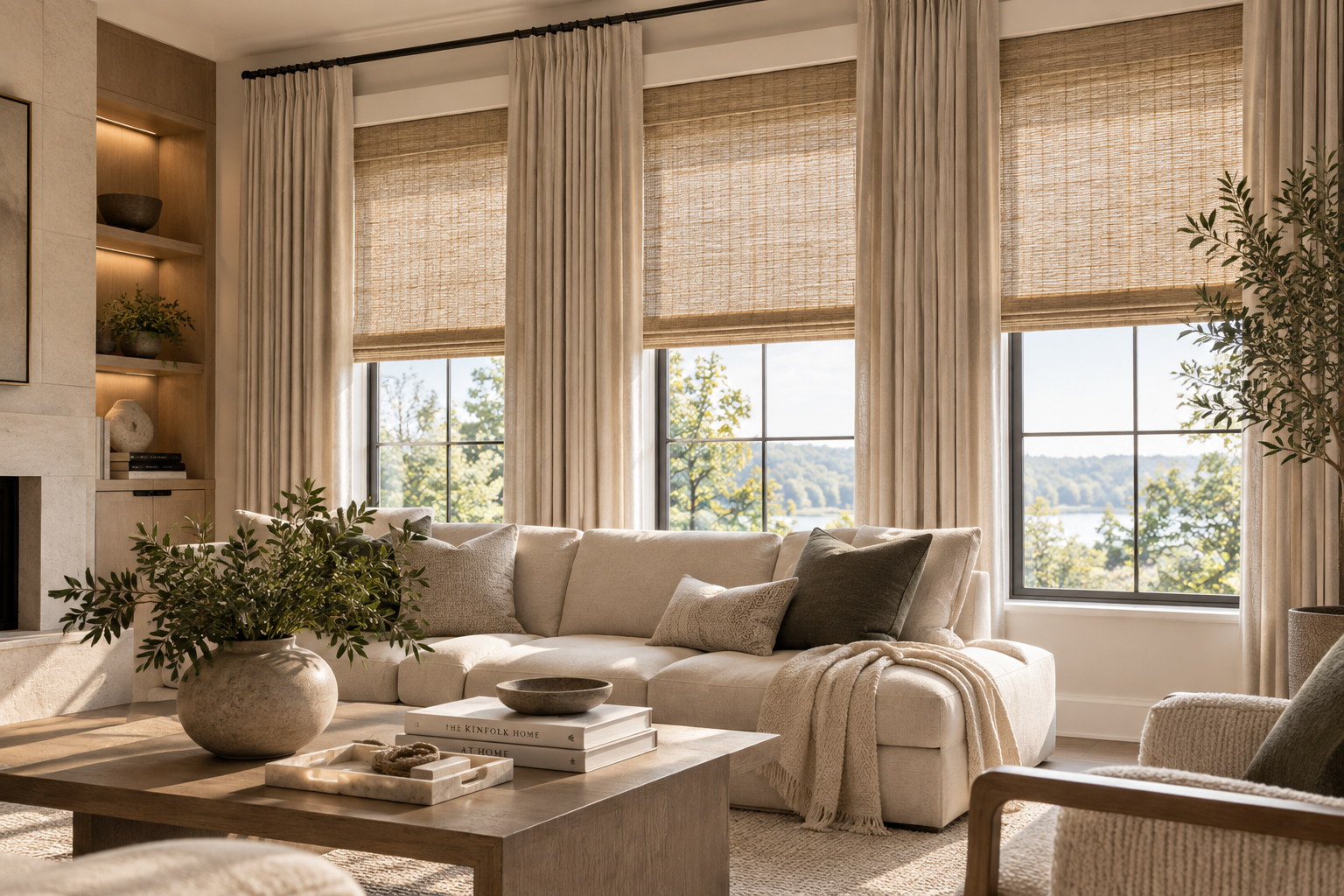
Window treatments are becoming a more intentional part of interior design. For 2027, the direction is less about simply covering a window and more about using texture, light, proportion and technology to complete a room.
At Shade Savvy, we work with homeowners, interior designers, builders and architects throughout the Pittsburgh area, and several design directions are becoming increasingly important as we look toward 2027.
1. Natural Texture Is Taking Center Stage
Warm, tactile materials continue to replace spaces that feel overly polished or stark. Woven shades, textured fabrics and materials inspired by linen, grasses and natural fibers bring dimension to a room without overwhelming it.
The key is subtlety. Rather than making the window treatment the loudest element in the space, texture adds another layer to the overall design.
2. Layered Window Treatments
One of our favorite directions for 2027 is layering.
Pairing a shade with drapery allows you to combine softness, privacy and light control while creating a much more finished architectural look.
A tailored roller or Roman shade paired with full-height drapery can completely change the scale of a room. It also allows each treatment to serve a different purpose—one can manage privacy and sunlight while the other adds softness and visual interest.
3. Warmer Neutrals
Cool grays have been giving way to warmer, more organic palettes, and window treatments are following the same direction.
Think soft ivory, oatmeal, sand, mushroom, taupe and earthy brown rather than stark white or cool gray.
These colors work especially well because they complement natural wood, stone and the warmer finishes appearing throughout today's interiors.
4. Quiet, Integrated Motorization
Motorized shades aren't about showing off technology. When they're designed well, the technology almost disappears.
In 2027, we're seeing greater interest in shades that quietly adjust throughout the day for glare, privacy and comfort.
For some homes, motorization makes perfect sense. For others, a beautifully designed manual shade is exactly what's needed. The important part is choosing the solution that works for the room and the way you actually live.
5. More Attention to the Architecture
We're also seeing window treatments become increasingly integrated with the architecture itself.
Placement matters.
Mounting treatments higher can emphasize ceiling height. Extending drapery beyond the window can make openings appear larger. Concealed pockets can allow shades to virtually disappear when raised.
The best window treatment doesn't just fit the window—it improves the proportions of the entire room.
6. Better Control of Natural Light
People are paying much more attention to how natural light changes a room throughout the day.
That means selecting fabrics and shade openness based not only on appearance, but also on window orientation, glare, privacy and how the space is actually used.
A beautiful fabric isn't necessarily the right fabric for every window.
7. Personalization Over One-Size-Fits-All Design
Perhaps the biggest shift isn't a particular color or material.
It's personalization.
Two identical windows can require completely different treatments depending on the room, exposure, privacy needs, architecture and the people using the space.
That's why custom window treatments continue to play such an important role in thoughtful interior design.
Designing for the Way You Live
Trends can provide inspiration, but the best interiors aren't designed around a checklist of what's popular.
They're designed around the architecture, the light and the people who live there.
At Shade Savvy, we help homeowners and trade professionals select custom shades, blinds and drapery—including both manual and motorized solutions—to create window treatments that feel intentional within the entire space.